Download Dorothy DeLay Checklist (FREE)
Transform Your Practice: The Legendary Juilliard Lesson Checklist I Got from Dorothy DeLay
For any aspiring violinist, the name Dorothy DeLay evokes a sense of awe. As a legendary professor at The Juilliard School, she shaped generations of the world's greatest soloists. I was fortunate enough to be one of her students, and today I want to share a tool she used that was simple, powerful, and fundamental to my growth as an artist.
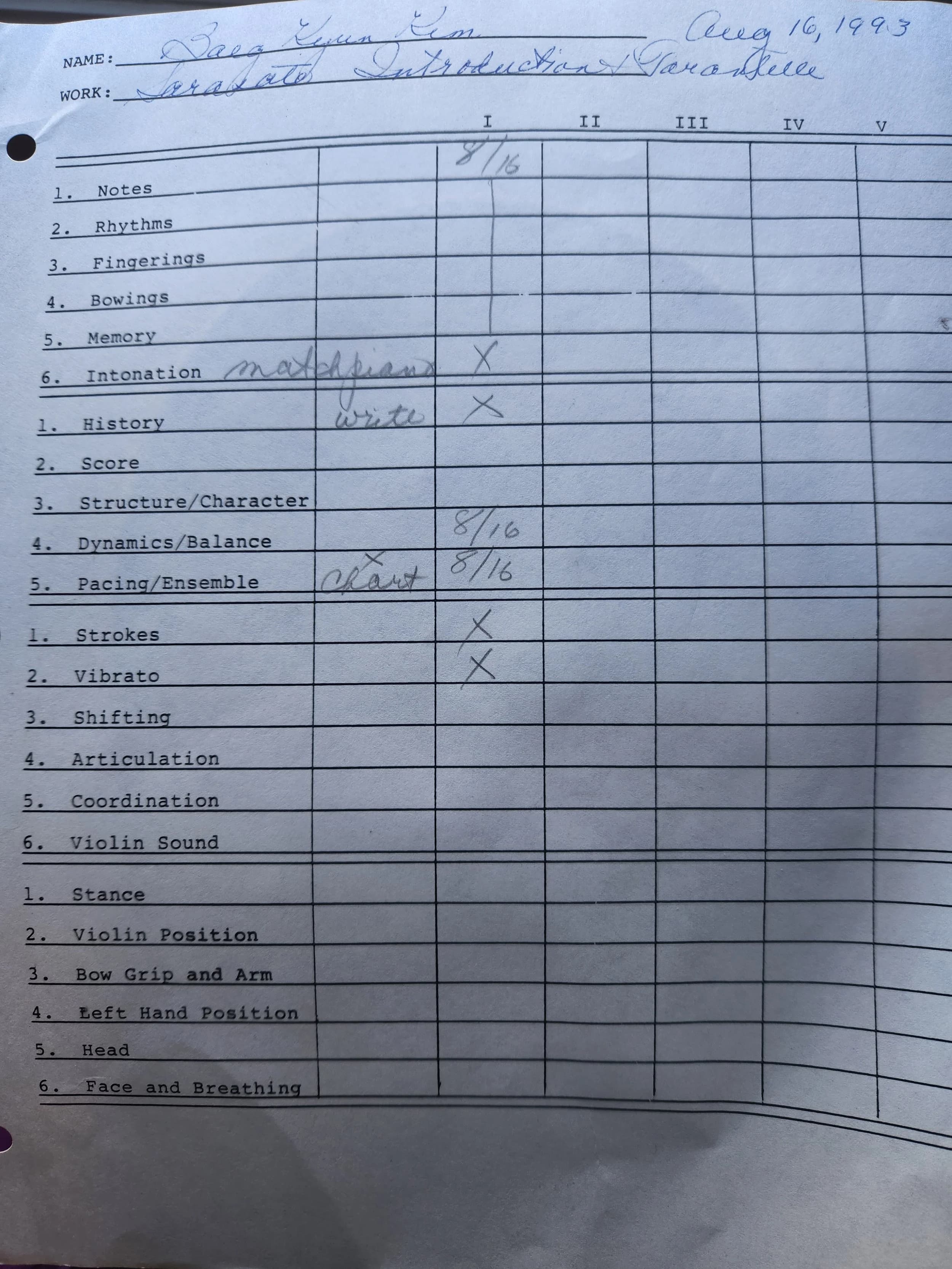
The tool is an actual lesson checklist used in her studio.
A Memory From The 5th Floor
August 16, 1993: I can still picture it perfectly. I was a kid standing in Ms. DeLay's famous studio on the 5th floor of The Juilliard School — my heart racing as I ran through Sarasate’s Introduction & Tarantella. After I finished, she offered her usual sweet and encouraging compliments, while showing me how I did on her checklist filled with constructive feedback.
You can see it in the actual image—the items marked with an 'X' were the areas that needed my immediate focus: intonation, history (yes, she insisted we research the composer and the story behind the music), bow strokes, and vibrato. The items marked with the lesson date, '8/16,' were the ones I did well/had successfully improved upon. This “simple” piece of paper was my roadmap to improve constantly. It provided clarity, focus, and a way to measure my progress week after week.
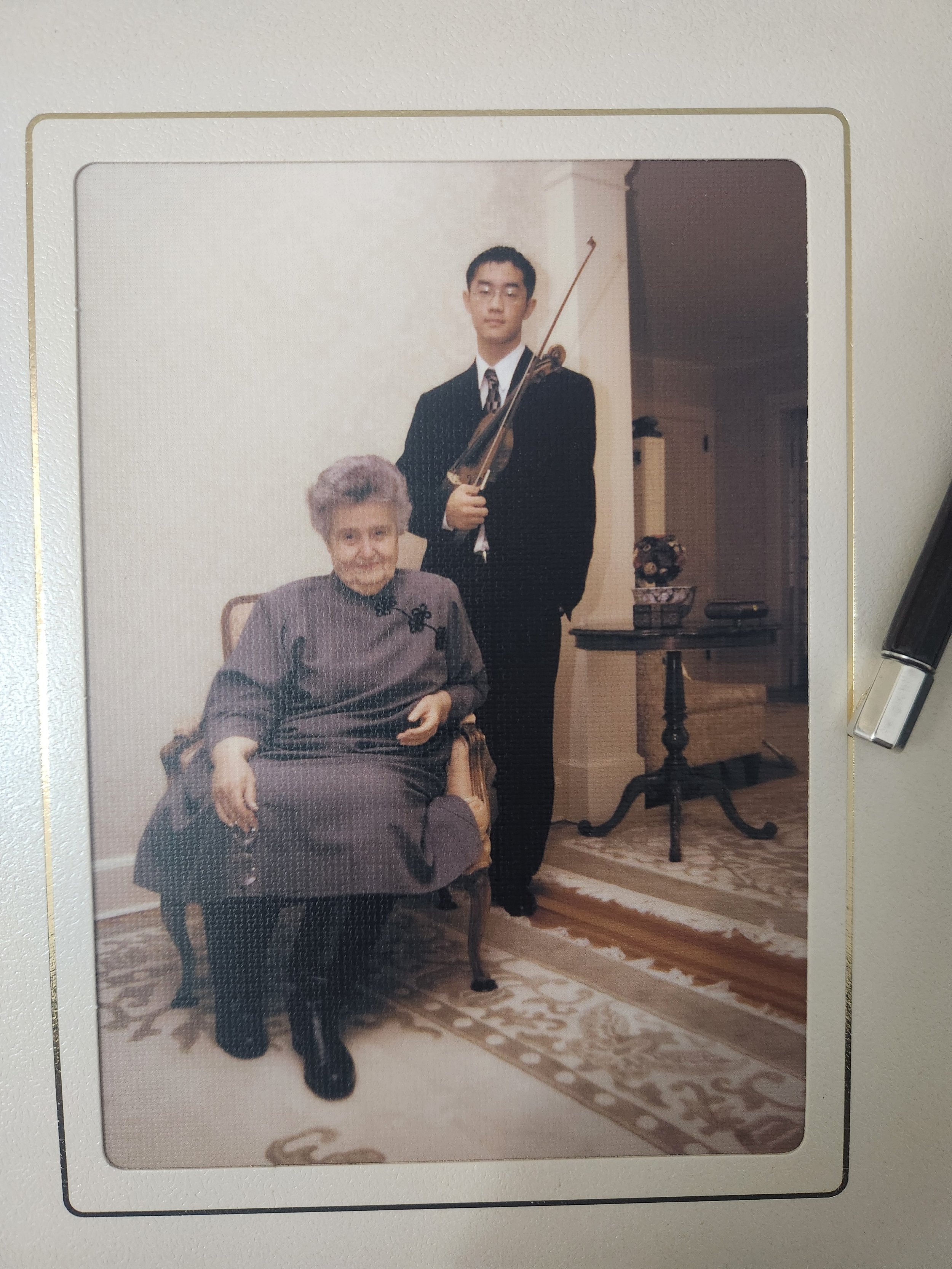
Looking back, her lessons never felt authoritarian or demanding; instead, they were collaborative experiences where my ideas and approaches were always respected (and challenged). Though I was laser-focused during our time together, I truly enjoyed every moment with Ms. DeLay because she made the environment so pleasant & relaxed; she was also super sweet as a person as well!
Why This Checklist is So Powerful
This isn't just a piece of paper; it's a reflection of a teaching philosophy that produces results.
It Transforms The Overwhelming Task of "Getting Better": By breaking it into manageable components, it trains you to first isolate these elements and then integrate them with full awareness as you play.
It Creates Accountability: It gives you a visual tool to track your progress, celebrate your strengths, and identify areas that need more work.
It Fosters a Holistic Approach: Notice how 'history' is on the list? Ms. DeLay taught us that being a musician meant more than mastering technique—it required becoming a well-rounded artist. While technique remained essential and heavily emphasized, I learned early on that disciplined technique serves to unlock freedom of musical expression. This means channeling personal experiences, emotions (yes, even heartbreaks!) to create something uniquely yours rather than sounding like a polished automaton.
The decade I spent learning from Ms. DeLay, both at Juilliard and as an artist at the Aspen Music Festival, shaped me into the teacher I am today. Her emphasis on structured practice, critical listening, and deep musical understanding is the foundation of my own teaching philosophy.
I've created a clean, printable template of this checklist for you to use & enjoy in your own practice sessions FOR FREE. Use it to bring focus to your work, identify areas for improvement, and start practicing with the same clarity that guided Ms. DeLay’s students in her fifth-floor studio at The Juilliard School.