Why Slur Spiccato Feels Uncontrollable
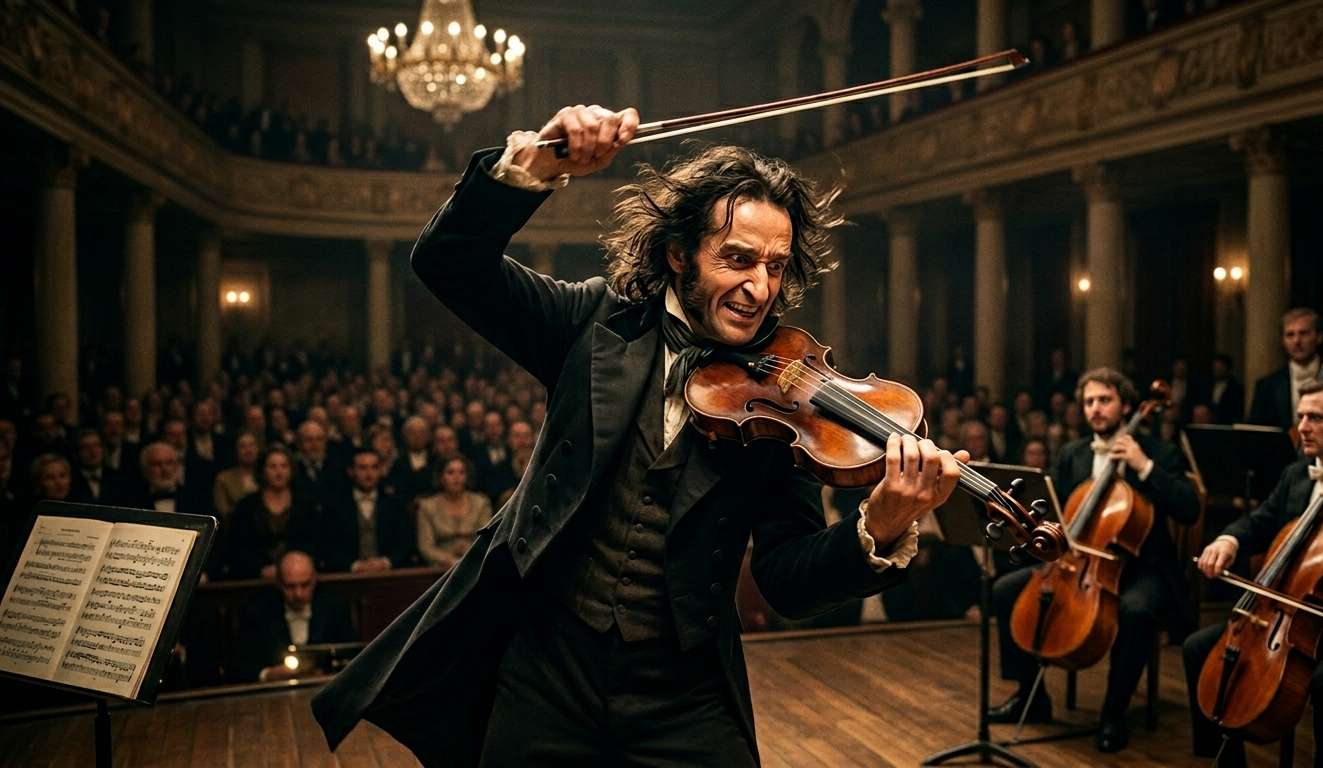
Variation 1 from Paganini’s 24th caprice has its infamous flying slurred spiccato!
Slur spiccato is often treated as one of the most advanced bow strokes in violin playing. It’s definitely NOT in most of standard violin repertoire and is considered an “extra credit”. Even some of the greatest violinists did not have the best slur spiccato!
You hear it in virtuosic repertoire—from Paganini Caprice No. 24 to Romantic showpieces — and it’s usually associated with speed, brilliance, impulse, and control.
But for most violinists, it feels unpredictable.
The bow bounces too much (or not at all!)
Notes blur together
The stroke completely falls apart at tempo
After a certain point, practicing more doesn’t fix it.
Because the real issue isn’t difficulty—it’s misunderstanding.
I. The Real Problem Isn’t the Bounce
Most players approach slur spiccato like this: “I need to control each note.”
So they:
Use more finger motion
Add tension to stabilize
Try to “place” every bounce
This creates the exact opposite result:
Inconsistent rhythm
Forced articulation
Loss of natural rebound
👉 The key shift:
Slur spiccato is not about creating the bounce.
It’s about allowing the bow to rebound under the right conditions.
II. What Actually Controls Slur Spiccato
There are three primary variables:
1. Bow Speed
Too slow → no rebound
Too fast → loss of clarity
The bow needs enough horizontal energy to sustain multiple rebounds.
2. Contact Point (i.e. Sounding Point)
Too close to the fingerboard → weak response
Too close to the bridge → stuck, heavy sound
The correct contact point allows the string to “return” energy to the bow.
3. Natural Balance of the Bow
Slur spiccato works best where the bow naturally wants to bounce
(usually upper-middle region; NOT lower-half or bottom)
This is not subjective — it’s built into the physics of the bow.
4. First upbow is the most important
This is probably the most critical; the first note from the slurred upbows is the most important, and needs a strong impulse.
👉 The trick is to instill muscle memory and coordination to “catch” and “bite” the first note, and use that momentum to push the other notes!
III. Why Most Students Get Stuck
Even advanced players struggle because they:
Try to control each bounce manually
Practice too fast too early
Ignore how setup affects response
Compensate with tension
Over time, this creates a cycle: More effort → less control → more frustration
IV. What Actually Changes the Stroke
Instead of forcing to:
Set bow speed correctly
Find the responsive contact point (sounding point)
Release unnecessary tension
Try to:
👉 Let the bow do part of the work
Allow Imperfection Early: Trying to make it perfect too early prevents the bow from ever stabilizing naturally.
V. Why This Matters More Than You Think
Slur spiccato is not just a “trick” stroke.
It reveals:
Your relationship with the bow
Your ability to release control
Your understanding of cause vs effect
And that’s why it appears in repertoire like Paganini Caprice No. 24—it exposes underlying technique.
If slur spiccato has always felt inconsistent, it’s usually not a coordination problem.
It’s about “understanding the concept” problem.
And once the setup is correct, the stroke often improves much faster than expected.
If you want to identify exactly what’s interfering with your control, you can Request a Consultation below — a structured session focused on diagnosing and correcting the root issue.
