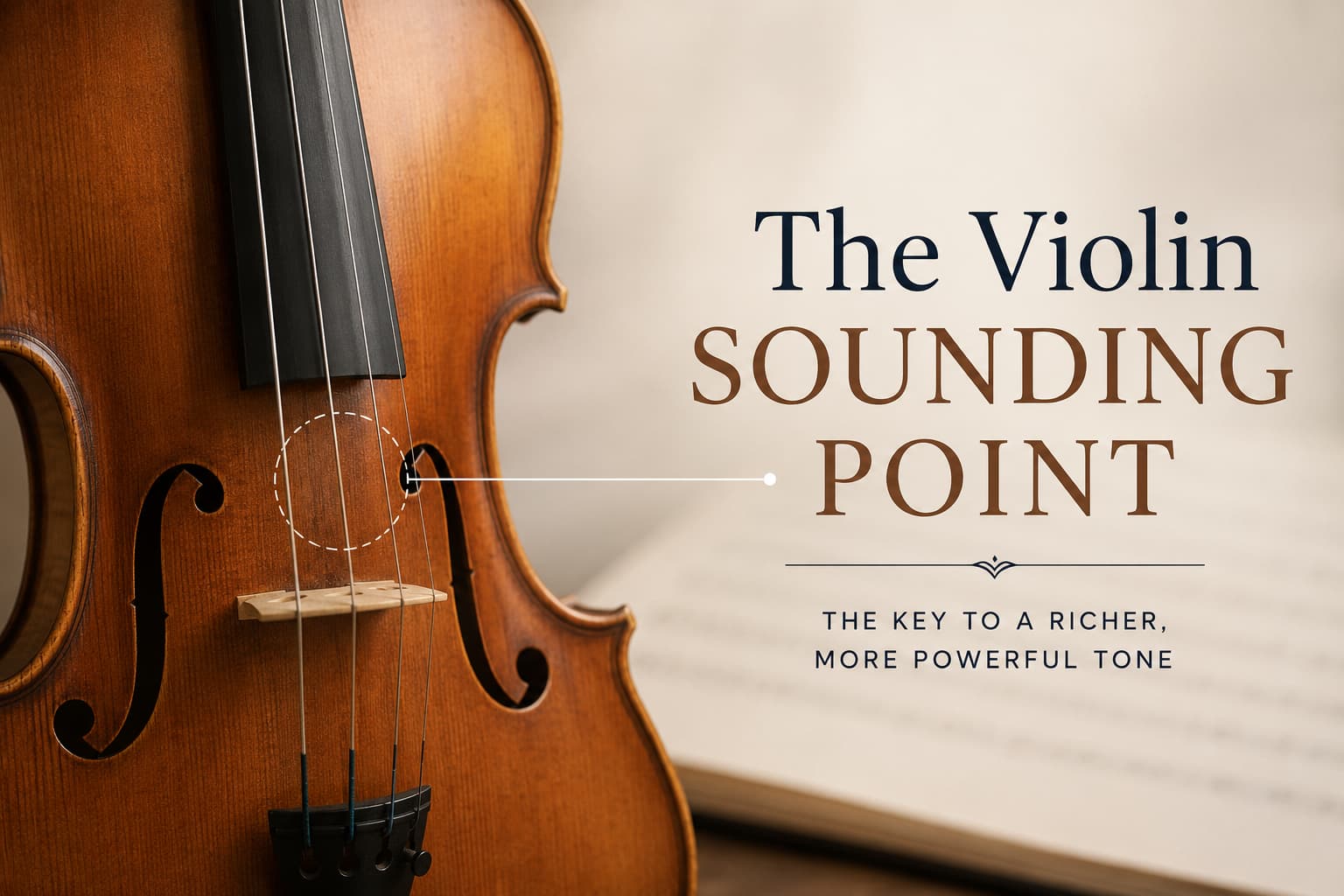
If your sound feels choked, glassy, or lacks a core, the problem isn't your talent or your equipment — it's a fundamental misalignment between your Sounding Point and your Arm Weight.
Let's break down the mechanics of how these two variables interact to build a flawless, projecting tone.
1. Decoding the Sounding Point
The sounding point is the specific "lane" where your bow hair contacts the string between the bridge and the fingerboard. This isn't a static choice; it is a fluid, moving target.
Near the Bridge (The High-Resistance Zone): The string feels more resistant here and responds best to a slower bow with carefully balanced weight, often producing a rich harmonic return.
Near the Fingerboard (The Low-Resistance Zone): The string feels more flexible here and generally responds best to a faster, lighter bow.
2. Weight vs. Pressure
The biggest technical leak I see is the misuse of pressure. Pressure comes from small, isolated muscles in the hand and thumb, leading to immediate tension.
Arm Weight, on the other hand, utilizes gravity. By relaxing your shoulder and letting the natural weight of your arm and forearm sink through a flexible index finger into the stick, you achieve a deep, ringing tone without physical strain.
3. The Alignment Equation
To master your tone, you must manage and be aware of these variables simultaneously.

Technical Audit Process
During your next practice session, run a quick check on your right arm:
Location: Look down at the bridge-fingerboard area to see how you’re bowing. Are you tracking straight, parallel to the bridge?
Release the Lever: Is your right thumb relaxed, but ready to support under the arm weight and pressure of index finger? Or is it locked and stiff?
Audit the Sound: If the tone cracks, your bow is too slow for the weight applied at that specific sounding point. Move your location, and/or adjust your speed/weight.
By replacing guesswork with mechanical logic, you eliminate tone frustration almost immediately.
A More Reliable Approach to Tone
The goal is not to force the string into producing more sound. It is to coordinate sounding point, bow speed, and weight so the instrument can respond freely and consistently.