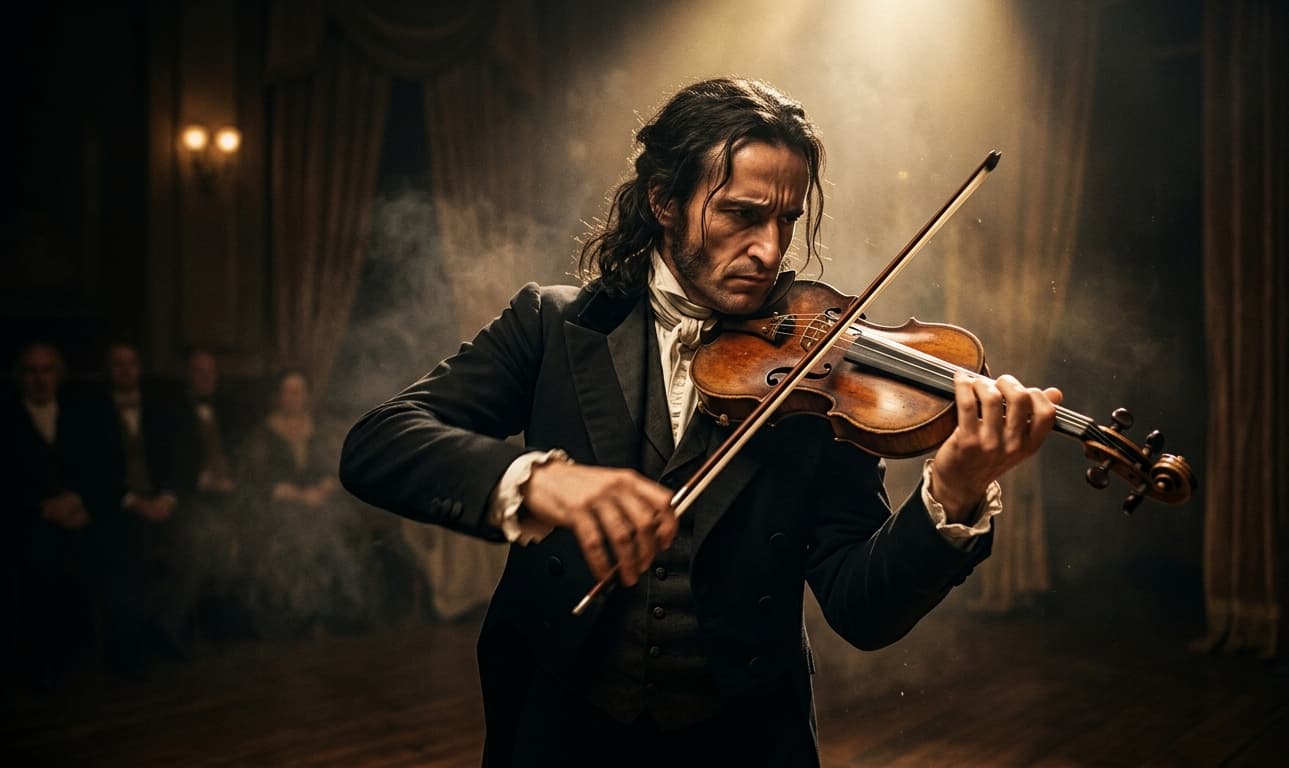
When we approach the "final climb" of Paganini’s 24th Caprice—from the rhythmic intensity throughout the piece into the breakneck finale—the natural human instinct is to fight. We grip the violin & bow tighter, we hold our breath, and we let our shoulders creep toward our ears.
However, virtuosity isn’t about effort; it’s about the economy of motion. Here’s how I approach staying relaxed during the demanding stretches of the violin repertoire.
1. The "Reset Breath"
Holding your breath often goes together with bracing through the torso, shoulders, and hands. Returning to a natural breathing pattern can help interrupt that tension and restore freedom of movement.
The Hack: Map your inhales. I treat the transitions between variations as a "reset" and of course, breathe regularly throughout the piece. Take a deep belly breath before Variation 10 to play super relaxed and also after Variation 10, so that your core is engaged and your limbs are free for the finale.
2. Pacing the Burn
If you are at Variation 7 playing 100% physically, you will have 0% left for the finale.
The Strategy: It’s not a long piece but think of the 24th caprice like a light, long-distance run rather than a intense, short sprint. Keep your bow arm and left hand fluid. Don’t get too excited and use the weight of your arm rather than the muscles of your hand and fingers to produce volume.
3. Identifying "Tension Triggers"
Tension is often a reaction to a specific technical fear—like the high-position shifts or the left-hand pizzicato.
The Fix: Practice the "release." Play a difficult passage and intentionally check the left side for a squeezing thumb/palm, or the bow arm for a gripping index/thumb. If you find yourself getting tense, lower the violin, shake your arm out, and restart — and tell yourself you’re playing a delicate piece like Mozart. You are retraining your nervous system to stay neutral & light under pressure.
Final Thoughts
These principles of relaxation and pacing aren't just for Paganini—they are the foundation for every piece in the violin repertoire. Whether you are preparing for a performance or simply looking to find more ease in your daily practice, the right technical framework and approach makes all the difference.