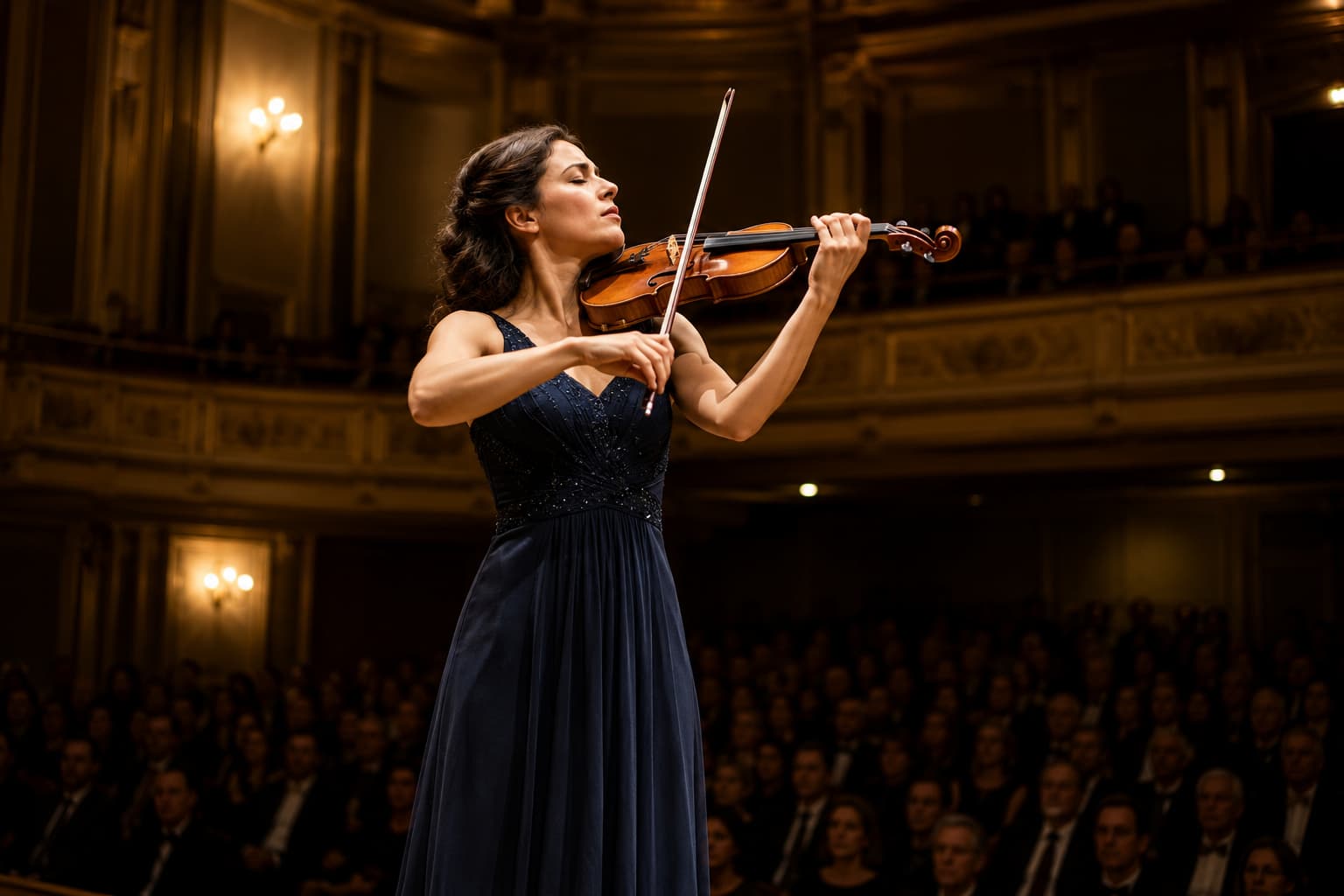
When studying the legendary pedagogical traditions of Ivan Galamian — insights I had the immense privilege of refining directly through the teachings of my teachers, Dorothy DeLay and Kyung-Wha Chung — I learned that elite tone production isn't just from a “feeling" or soul. It is from the precise synchronization of five mechanical variables: Sounding Point, Arm Weight, Bow Speed, Bow/Arm Angle, and the execution of the Catch, Release, and Sustain.
If your sound feels choked, glassy, or inconsistent, one of these five pillars is leaking energy. Let’s map the entire ecosystem.
5-Variable Tonal Ecosystem
1. The Sounding Point (The Infrastructure)
The sounding point is the specific "lane" your bow occupies between the bridge and the fingerboard. Think of it as your strategic landscape. Near the bridge, string resistance is high; near the fingerboard, it is low. Every dynamic and technical choice dictates which lane you must track.
2. Arm Weight (The Source)
Excessive force from the fingers or thumb can restrict the string's vibration and produce a pressed sound. Coordinating the arm's weight with bow speed and sounding point usually produces a more resonant result.
3. Bow & Arm Angle (The Transmission)
To transfer arm weight efficiently, your bow must remain perfectly perpendicular to the string. As the bow moves from frog to tip, your arm angle (the relationship between shoulder, elbow, and wrist) must fluidly morph. If your arm angle is static, the bow skews, the sounding point drifts, and your tonal capital is lost.
4. The Catch & Release (The Ignition)
One of the trademarks of Galamian lineage. Notes are not initiated horizontally; they are born vertically first.
The Catch: Before the bow moves, use your Arm Angle to let Arm Weight sink in at your exact Sounding Point. The bow hair literally "catches" and holds the string. It is a micro-moment of total friction.
The Release: The instant the bow begins its horizontal stroke, you must immediately release that vertical weight. If you keep pressing, the sound chokes.
5. Bow Speed & Sustain (The Momentum)
The energy released from the "Catch" must instantly be converted into horizontal Bow Speed. This connects directly to the Sustain— allowing the string to bloom and ring naturally. As a rule of thumb, if you are near the bridge, you use deeper weight and slower speed. If you move toward the fingerboard, you use lighter weight and faster speed.
Final Thoughts
Keep in mind that there are more variables to keep in mind. If you grip the bow too tightly, the sound becomes strained and distorted; if you hold it too loosely, the sound spreads out and fades away. If the angle between the bow and your arm is off, the sounding point can become unstable. Since there are extra variables (posture, bow hold, breathing, etc.), always keep your ears on high alert, listen carefully with the utmost sensitivity, and consult with your teacher regularly.
Most importantly, keep listening to your sound with curiosity—there is always another detail to refine.
— Korean translation below —-
연주자들이 넓은 콘서트홀을 뚫고 나가는 울림을 만드는 방식, 기가막힌 아름다운 소리를 낼수 있는건 걍 삘/감각이 아닌, 철저히 계산된 결과물이다. 팔무게만 이용해서 하는게 절대 아니다.
1️⃣ 사운딩 포인트 (Sounding Point): 브릿지와 지판 사이의 '어느 라인'을 활로 그을 것인가?
2️⃣ 팔 무게 (Arm Weight): 팔, 손 근육으로 누르는 힘(Pressure)이 절대 아님. 어깨를 풀고 중력을 이용해 오른팔 전체의 무게를 활에 실어주는것. 엄지, 검지, 새끼가 중요하다.
3️⃣ 활 각도, 팔 각도 (Bow & Arm Angle): 활이 현과 "완벽한" 각도를 유지하도록 (사람, 취향마다 틀림; 난 개인적으로 약간 지판쪽으로 기우는걸 좋아한다), 그리고 팔꿈치와 손목의 각도가 활의 위치(프로그~팁)에 따라 유기적으로 변해야 에너지 손실이 없다.
4️⃣ 캐치 앤 릴리즈 (Catch & Release): 이건 갈라미안 라인 테크닉인데 (개인적으로 난 딜레이 선생님, 정경화 선생님한테 진짜 머리 터지도록 죽도록 배움), 처음에 터득하기가 꽤 어렵다. 활이 현을 시작하는 찰나 팔의 각도, 무게, 속도를 이용해 현을 활로 “잡고” (Catch), 선율이 출발하는 즉시 수직 압력을 풀어(Release) 풀어준다. 난 모든 음들을 이렇게 하진않고 (난 개인적으로 성장하면서 미국 스타일보다 러시안, 유럽 스타일이 좋아져서 섞게됐다) 내가 뻗고 싶은 음들, 강조하고 싶은 음들, 음악 스타일에 알맞게 쓴다. 이걸 제대로 하면 효과 쥑인다.
5️⃣ 활 속도와 지속 (Bow Speed & Sustain): 활 속도가 현에서 왔다갔다 할때 방해받지 않고 최대한 울리도록 "뼈대" 있는 소리를 지속(Sustain)시킨다.
이 5가지가 딱 맞물릴 때, 최소한의 힘으로 압도적인 호소력있는 소리를 낼 수 있다.
마지막으로 활을 너무 잡거나 움켜쥐면 하면 소리가 텐션들어가고 찌그러지고, 너무 풀어주기만 하면 소리가 퍼지고 날아간다. 또 활/팔 각도가 틀어지면 사운딩 포인트가 흔들릴수도 있고. 이거보다 변수가 더 많으니 (자세, 보우홀드, 숨쉬기등등) 항상 귀 쫑긋해서 잘 듣고 선생님이랑 항상 잘 상의하고, 제일 중요한 것은 호기심을 가지고 자신의 소리를 계속 듣는 것이다.
언제나 더 세심하게 다듬을 부분이 있다.