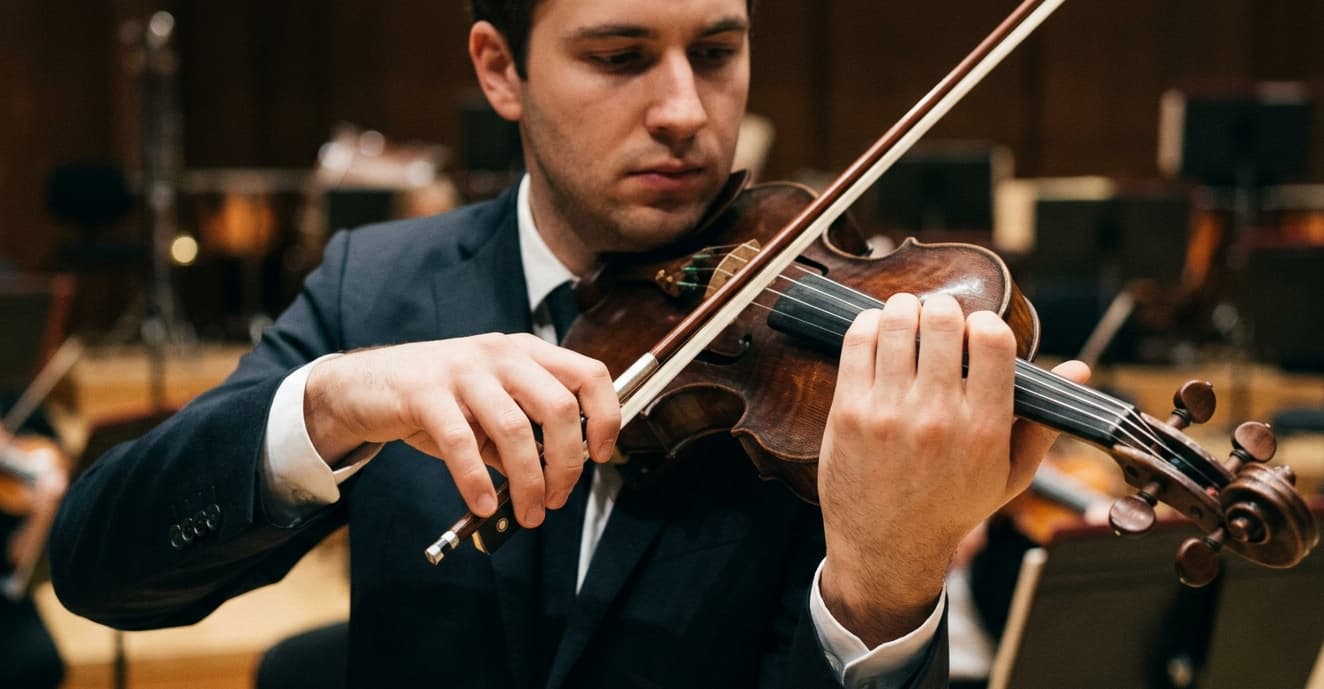
Have you ever felt like you’re working ten times harder than you need to, but your sound still feels "thin" or "scratchy"? Do you still have that tensed up “Beginner” sound?
The secret to a clear, resonant tone isn't rocket science — it’s weight, speed, and sounding point. This is why everyone has a unique voice. When we try to push the bow into the string, our hand stiffens, and the sound chokes. To let your violin truly sing, you have to learn the art of the relaxed right hand.
1. The "Wet Noodle" Test
Before you even pick up the bow, let your right arm hang dead-weight at your side. Shake it out until your wrist and fingers feel like wet noodles.
The Lesson: This is the level of relaxation we want. Your hand should be flexible like fresh noodles, not a frozen pizza!
2. Think "Resting," Not "Pressing"
Imagine you are holding a rubber squeaky toy.
The Trick: If you squeeze the toy as hard as you can, it makes a high, shrill, stressful noise. That is exactly what happens to your violin sound when you 'grip' the bow. You are choking the sound, and the violin 'squeaks'. Instead of using your hand to press down, let the natural weight of your arm "drop" into the string through your index finger. Remember not to press down on the index finger with extra force — this is important!
The Result: A rich, resonant core to your sound that carries across the room.
Pressing = Thin, scratchy, painful 'ouch' sound.
Resting = Big, deep, rich, and 'happy' sound.
3. The Relaxed Fingers
Your fingers are the suspension system of a luxury car. If they are locked straight, or gripping the bow tight, you’ll feel every "bump" in the bow change, resulting in a crunched, forced sound.
The Secret: Keep your thumb completely relaxed, with your middle, ring, and pink just laying lightly on the bow. As you move the bow, your fingers should subtly change shape — not because you're intentionally making it move — but only because you're absorbing the friction of the hair against the string.
4. The 3 Pillars of Tone
A clear sound depends on physical coordination, not muscular force. If you are not happy with your tone, check these 3 things:
Weight: Are you letting gravity (natural weight of your arm) do the work or are you working too hard?
Speed: Sound needs air to breathe, vibrate, and travel. Is your bow speed matching the weight you're applying? Are you distributing the bow properly?
Sounding Point: Are you too close to the bridge (crunchy) or too over the fingerboard (whispery)?
A scratchy or pressed tone is usually useful information: it points back to the balance among weight, speed and sounding point. Practise one variable at a time, then listen to how they work together.