Beyond the Melody: Mastering Lyrical Expression in Haydn’s "Emperor" Quartet
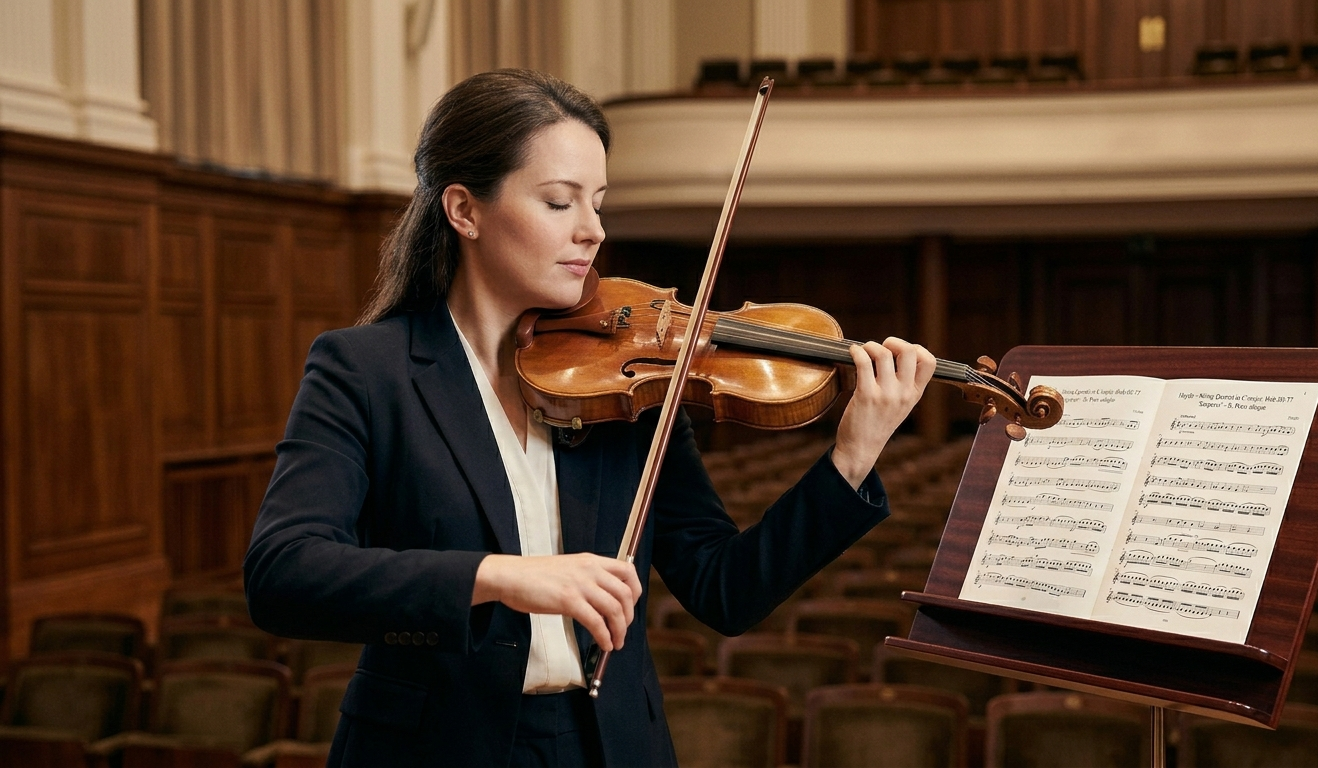
Lyrical passage from Haydn’s Emperor quartet is so beautiful!
The 2nd movement of Haydn’s String Quartet in C major, Hob.III:77 contains one of the most sublime melodies in the Western canon. While the "Gott erhalte Franz den Kaiser" theme appears simple on the page, performing it with true lyrical expression requires sophisticated bow control, a shimmering yet disciplined vibrato, and a deeply 'vocal' approach to phrasing.
The Challenge of Simplicity
In the Emperor variations, the theme is presented with a noble, hymn-like quality. The primary challenge for the violinist is sustain. When we play a long, lyrical line, the "cracks" in our technique — unsteady bow speed, uneven pressure, or a nervous vibrato —become magnified.
3 Keys to the "Vocal" Style
To capture the lyrical essence of this movement, focus on these three pillars:
Play Like A Singer: To play like a singer, focus on the space between the notes. Imagine a singer who has such incredible breath control that they can sing a long, winding sentence without ever taking a "catch-breath." Lyrical violin playing mimics this dynamic contour. Your goal is to mask the bow changes so seamlessly — and control your vibrato so purposefully — that the listener hears a single, uninterrupted thought rather than a succession of individual strokes.
Phrase Like A Singer: Singers have to breathe. As string players, our "breath" is the bow change. In the Emperor theme, try to map out where a singer would take a breath. Lean into the appoggiaturas and allow the sound to taper naturally at the ends of phrases.
Think Like A Singer: Rather than focusing on the vertical weight of each chord, follow the vocal line. A singer’s mind works to pull towards the next interval, creating a horizontal momentum that carries the listener through the phrase and keeps the music from feeling stagnant.
Watch: Technique in Action
To see the "3 Keys to the Vocal Style" in action, look for these specific physical cues from the video below:
The smooth transition at the frog and tip paired with vibrato control, where the sound continues to "bloom" even as the bow changes direction.
The slight lift and release in the bow arm that signals the end of one musical thought and the beginning of the next.
The left hand’s anticipation of the next note, vibrato control, and the constant forward motion of the bow, bridging the gaps between intervals.
Final Thoughts
Mastering lyrical expression is a lifelong pursuit — a constant refinement of breath, bow, and soul. To truly make the violin sing, one must treat the music as a canvas, demanding a rare blend of technique, precision, and patience to transform a simple melody into a living, breathing voice.
